
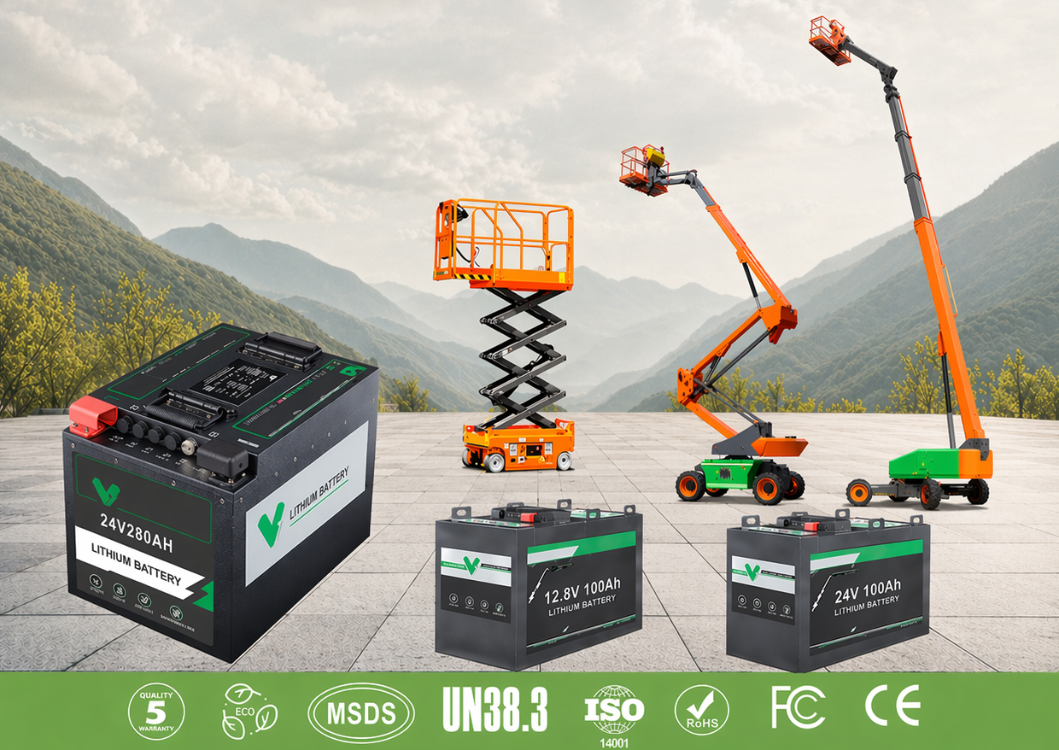
Lithium Battery Solutions
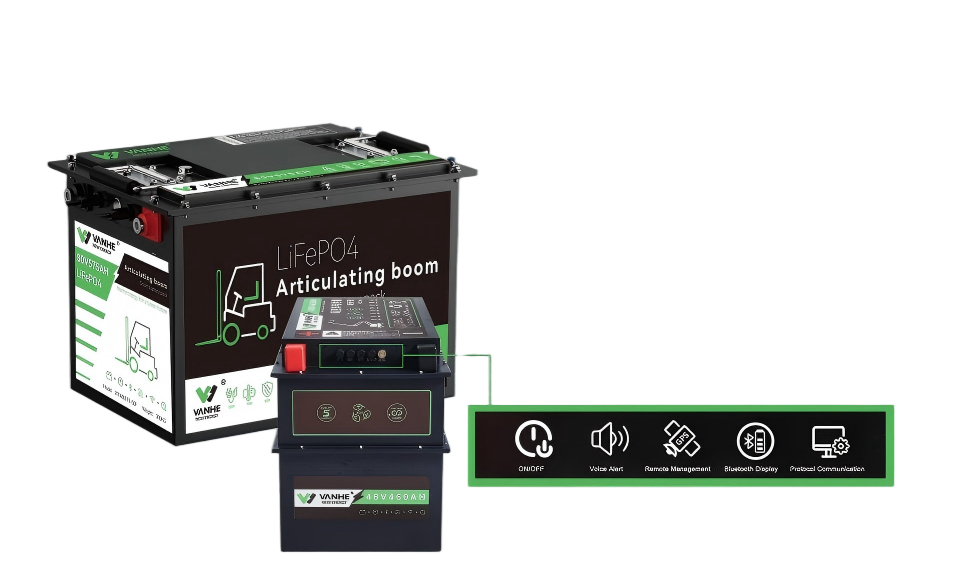
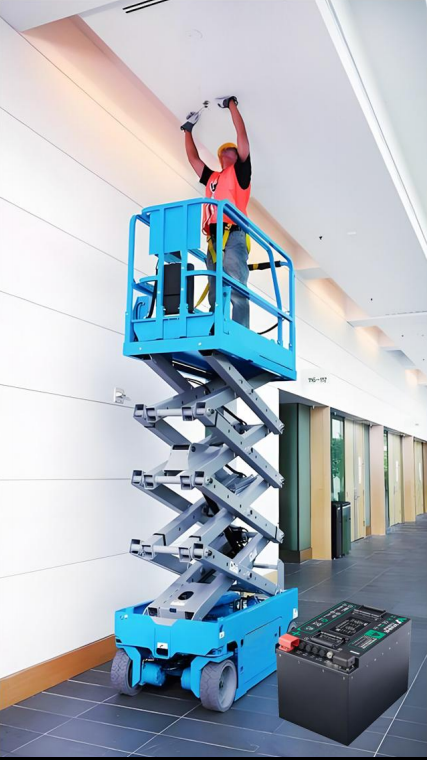
Scissor Lift
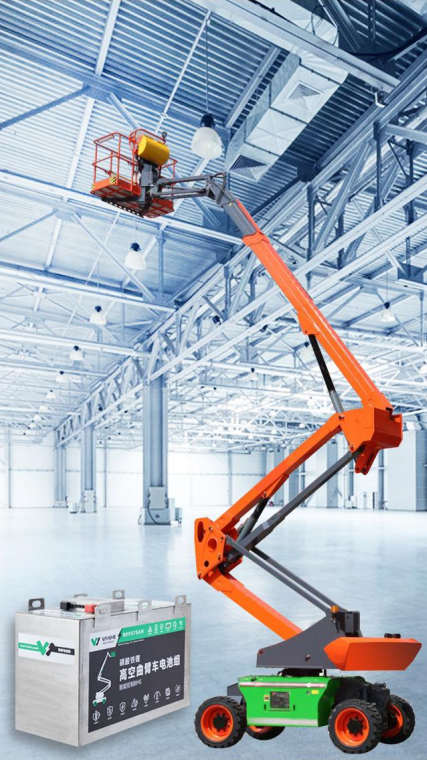
Articulating Boom Lift
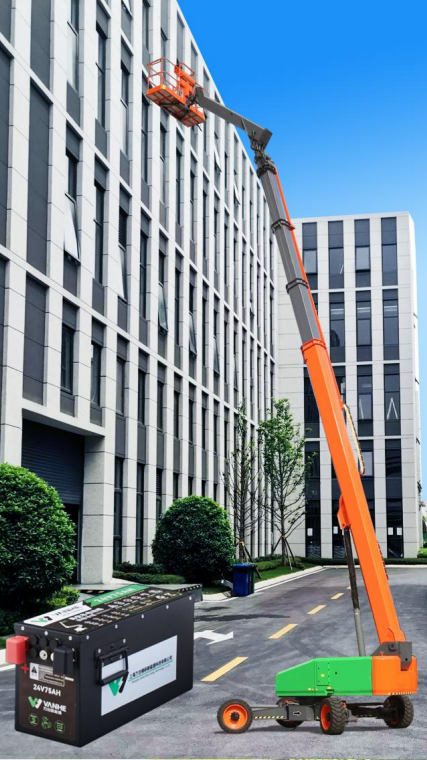
Telescopic Boom Lift
| Model | Nominal Voltage | Nominal Capacity | Stored Energy | Maximum Charge Current | Standard Charge Current | Standard Charge Time | Continuous Discharge Current | Maximum Discharge Current | Weight (KG) | Dimension (L*W*H) |
|---|---|---|---|---|---|---|---|---|---|---|
| WT42475A | 25.6V | 75AH | 1920WH | 75A | 15A | 5H | 150A | 300A | 17.4KG | 462*163*220mm |
| WT42475B | 25.6V | 75AH | 1920WH | 75A | 15A | 5H | 150A | 300A | 19.5KG | 300*300*250mm |
| WT42490A | 25.6V | 90AH | 2286WH | 90A | 20A | 4.5H | 150A | 300A | 19.5KG | 462*163*220mm |
| WT42490B | 25.6V | 90AH | 2286WH | 90A | 20A | 4.5H | 150A | 300A | 21.5KG | 360*260*270mm |
| WT424105 | 25.6V | 105AH | 2667WH | 100A | 30A | 3.5H | 250A | 500A | 29KG | 360*260*270mm |
| WT424125 | 25.6V | 125AH | 3175WH | 100A | 30A | 4.2H | 250A | 500A | 31.5KG | 360*260*270mm |
| WT424150 | 25.6V | 150AH | 3810WH | 100A | 50A | 3H | 250A | 500A | 35KG | 360*260*270mm |
| WT424210 | 25.6V | 210AH | 5334WH | 150A | 50A | 4.2H | 250A | 500A | 43KG | 360*260*270mm |
| WT424230 | 25.6V | 230AH | 5842WH | 150A | 50A | 4.6H | 250A | 500A | 45KG | 360*260*270mm |
| WT424280 | 25.6V | 280AH | 7112WH | 150A | 50A | 5.6H | 250A | 500A | 63KG | 500*350*280mm |
| WT424320 | 25.6V | 320AH | 8128WH | 150A | 50A | 6.4H | 250A | 500A | 66KG | 500*350*280mm |
| WT448230 | 51.2V | 230AH | 11776WH | 150A | 50A | 4.6H | 600A | 1500A | 91KG | 650*290*420mm |
| WT448280 | 51.2V | 280AH | 14336WH | 150A | 50A | 5.6H | 600A | 1500A | 114KG | 650*290*420mm |
| WT448320A | 51.2V | 320AH | 16384WH | 150A | 50A | 6.4H | 600A | 1500A | 120KG | 650*290*420mm |
| WT448320B | 51.2V | 320AH | 16384WH | 150A | 50A | 6.4H | 600A | 1500A | 122KG | 650*390*480mm |
| WT448460 | 51.2V | 460AH | 23552WH | 150A | 50A | 5.7H | 600A | 1500A | 169KG | 620*390*480mm |
| WT448560 | 51.2V | 560AH | 28672WH | 150A | 80A | 7H | 600A | 1500A | 210KG | 620*390*480mm |
| WT480460 | 76.8V | 460AH | 35328WH | 150A | 80A | 5.7H | 600A | 1500A | 251KG | 505*486*750mm |
| WT480560 | 76.8V | 560AH | 43008WH | 150A | 80A | 7H | 600A | 1500A | 316KG | 505*486*750mm |
| WT480640 | 76.8V | 640AH | 49152WH | 150A | 80A | 8H | 600A | 1500A | 330KG | 505*486*750mm |
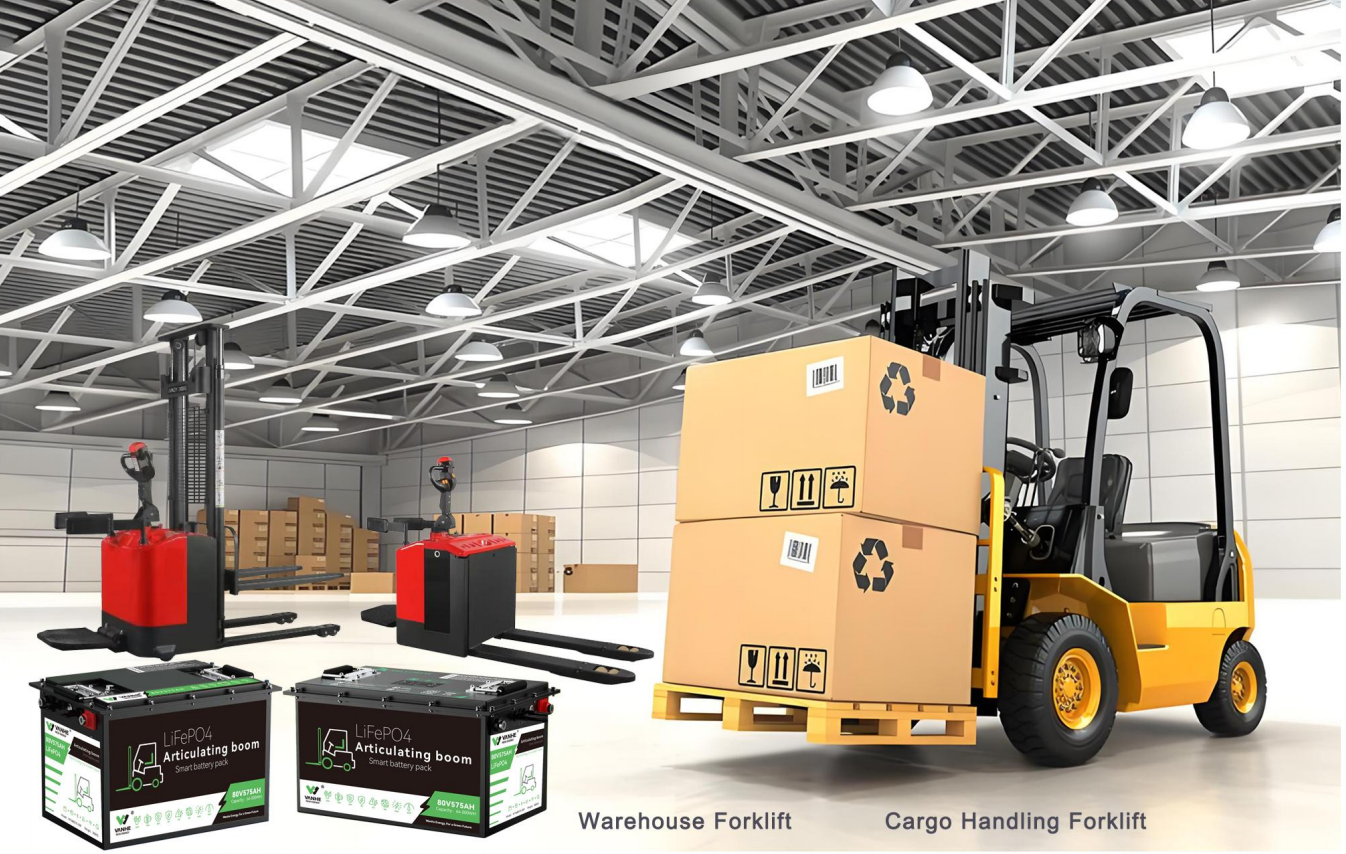
| Model | Nominal Voltage | Nominal Capacity | Stored Energy | Maximum Charge Current | Standard Charge Current | Standard Charge Time | Continuous Discharge Current | Maximum Discharge Current | Weight (KG) | Dimension (L*W*H) |
|---|---|---|---|---|---|---|---|---|---|---|
| WT32475 | 25.6V | 75AH | 1920WH | 75A | 15A | 5H | 150A | 300A | 18KG | 462*163*220mm |
| WT324105 | 25.6V | 105AH | 2667WH | 100A | 30A | 3.5H | 250A | 500A | 22KG | 462*163*220mm |
| WT324150 | 25.6V | 150AH | 3810WH | 100A | 50A | 3H | 250A | 500A | 40KG | 630*180*470mm |
| WT324210 | 25.6V | 210AH | 5334WH | 150A | 50A | 4.2H | 250A | 500A | 50KG | 630*180*470mm |
| WT324230 | 25.6V | 230AH | 5842WH | 150A | 50A | 4.6H | 250A | 500A | 52KG | 630*180*470mm |
| WT324280 | 25.6V | 280AH | 7112WH | 150A | 50A | 5.6H | 250A | 500A | 62KG | 630*180*470mm |
| WT324320 | 25.6V | 320AH | 8128WH | 150A | 50A | 6.4H | 250A | 500A | 65KG | 630*180*470mm |
| WT336210 | 38.4V | 230AH | 8832WH | 150A | 50A | 4.2H | 250A | 500A | 180KG | 600*350*600mm |
| WT326230 | 38.4V | 280AH | 10752WH | 150A | 50A | 4.6H | 250A | 500A | 198KG | 600*350*600mm |
| WT336280 | 38.4V | 460AH | 17664WH | 150A | 50A | 5.6H | 250A | 500A | 302KG | 950*400*600mm |
| WT336320 | 38.4V | 560AH | 21504WH | 150A | 50A | 6.4H | 250A | 500A | 320KG | 1000*700*600mm |
| WT348230 | 51.2V | 230AH | 11776WH | 150A | 50A | 4.6H | 250A | 500A | 202KG | 950*375*550mm |
| WT348280 | 51.2V | 280AH | 14336WH | 150A | 50A | 5.6H | 250A | 500A | 224KG | 950*375*550mm |
| WT348320 | 51.2V | 320AH | 16384WH | 150A | 50A | 6.4H | 250A | 500A | 230KG | 950*375*550mm |
| WT448460 | 51.2V | 460AH | 23552WH | 150A | 80A | 5.7H | 250A | 500A | 390KG | 988*692*635mm |
| WT448560 | 51.2V | 560AH | 28672WH | 150A | 80A | 7H | 250A | 500A | 540KG | 1005*863*595mm |
| WT480460 | 76.8V | 460AH | 35328WH | 150A | 80A | 5.7H | 300A | 800A | 428KG | 815*740*635mm |
| WT480560 | 76.8V | 560AH | 43008WH | 150A | 80A | 7H | 300A | 800A | 440KG | 1005*765*650mm |
| WT480640 | 76.8V | 640AH | 49152WH | 150A | 80A | 8H | 300A | 800A | 450KG | 1005*765*650mm |
Built for Equipment That Works Every Day
ChangebatteryPRO provides practical LiFePO4 battery pack solutions for aerial work platforms, forklifts, floor scrubbers, and other utility equipment. We focus on stable performance, safer operation, and lower maintenance costs for real working environments.
Key Benefits
Qualifications and Honors
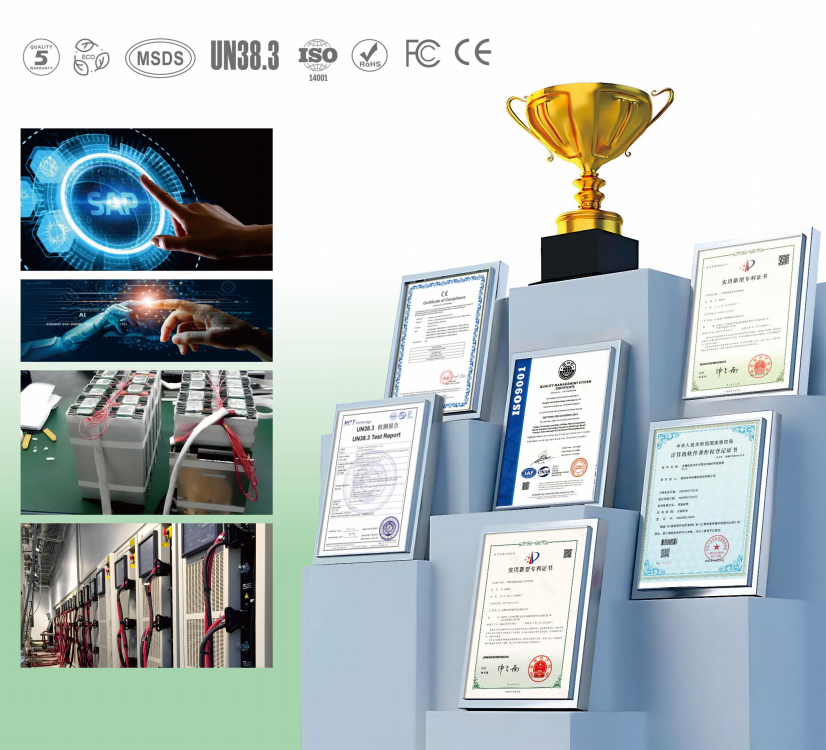
Shanghai Vanhe New Energy Technology Co., Ltd. has been certified by the ISO 9001 Quality Management System, and our products have passed a range of internationally recognized certifications, including MSDS,RoHS, CE, and UN38.3. These certifications not only affirm the quality of our products but also serve as atestament to our technical expertise and brand credibility. We have never ceased our commitment totechnological innovation. Our independently developed BMS battery management system has earned multiplepatents and is now widely applied across projects with leading enterprises. Through the integration of thesepatented technologies, we deliver efficient and high-performance low-speed power battery solutions that helpclients reduce overall product costs and increase market competitiveness.
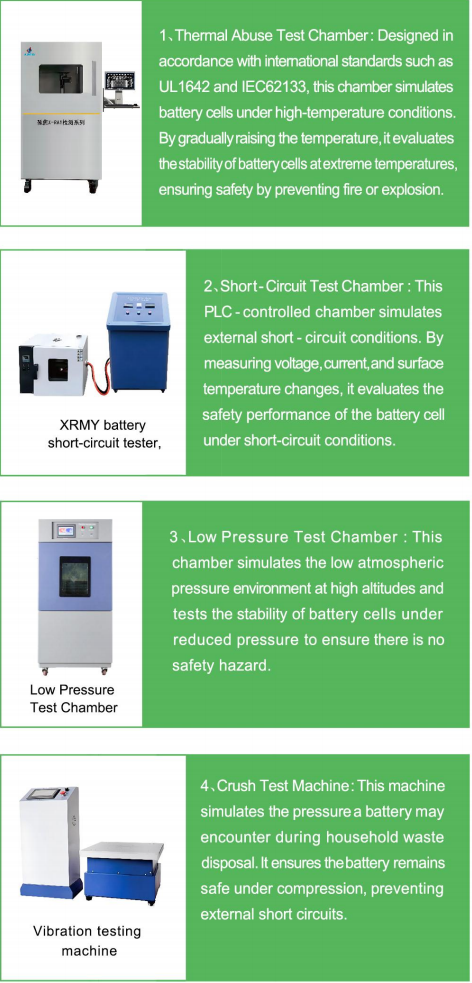
Technical Advantages
We use brand-new, A-grade LiFePO4 cells with a service life of up to 15 years and support up to 4,000 charge-discharge cycles. Vanhe intelligent Battery Management System (BMS) ensures reliable, precise, multifunctional, and cost-effective performance.
| Charge and Discharge Management & Protection | ||
|---|---|---|
| Management Categories | Standard BMS Management System | Vanhe BMS Management System |
| Charge and Discharge Protection | Stops charging or discharging when the single cell voltage falls below the minimum specified in the cell datasheet, preventing damage caused by overcharging or overdischarging. | Features active cell balancing to correct charging/discharging imbalances, smart voice alerts to notify on-site users, and 24-hour remote monitoring of the charge/discharge process. Abnormal conditions trigger alarms to effectively protect the cells, greatly enhancing both safety and service life. |
| Overcurrent Protection | Cuts off charge and discharge output when the detected current exceeds the limits specified in the BMS specifications, preventing damage to both the BMS and battery cells. | Provides multiple layers of intelligent protection to prevent equipment overload or abnormal current from damaging the battery pack or connected electrical devices. Safety is further ensured through a multi-channel warning system, including proactive remote alerts, on-site voice warnings, and fault mode indicators on the battery display. |
| Short-Circuit Protection | Immediately shuts down when a short circuit is detected in the load or cabling to prevent safety hazards. | Provides voice alerts for on-site users and automatic notifications to backend managers via the remote management mobile app. The system supports remote battery switching and automatically shuts down the battery upon detecting a short circuit. Additionally, the remote management system reports the incident and contacts the customer promptly to prevent safety accidents caused by charge/discharge short circuits. |
| Temperature Protection | When over-temperature occurs during charging or discharging, the system automatically stops charging and discharging to prevent hazards caused by excessive heat. | Equipped with multiple temperature sensors, the system triggers alarms for abnormal high or low temperatures. Smart voice alerts notify on-site users, while the remote management app automatically informs backend administrators for timely response—preventing accidents caused by overheating or battery damage from low temperatures. |
| Heavy Load & High Surge Protection | Under heavy load or high surge conditions, the system may experience crashes, power outages, or communication interruptions. | Employs multiple hardware and software protection strategies to ensure the system operates without crashes, power outages, or communication interruptions—even under extreme usage conditions. |
| Balancing Mode Management and Protection | ||
|---|---|---|
| Management Categories | Standard BMS Management System | Vanhe BMS Management System |
| Charge Balancing | Passive end-of-charge balancing occurs when the battery voltage reaches a certain level, activating passive energy-consuming balancing. The balancing current is generally less than 70mA, balancing time is short, and the effect on cell balancing and recovery is minimal. | Active balancing is supported throughout the entire charging process. The balancing current can reach 1–5A, enabling rapid cell repair and maintaining cells in an optimal balanced state. After balancing is complete, the system automatically enters sleep mode and consumes no power. |
| Discharge Balancing | Not supported. | Active discharge balancing is supported throughout the entire discharge process. The balancing current can reach 1–5A, ensuring the cells remain in an optimal balanced state, effectively extending their cycle life. After balancing is complete, the system automatically enters sleep mode without consuming power. |
| Static Balancing | Not supported. | Static active balancing is supported throughout the entire static process, with balancing current reaching up to 1–5A. The system automatically enters sleep mode when balancing is complete, consuming no power. |
| Idle State Management & Protection | ||
|---|---|---|
| Management Categories | Standard BMS Management System | Vanhe BMS Management System |
| Peripheral Power Consumption | High power consumption from peripherals and prolonged idle power-on states damage battery cells, causing imbalance and reducing cycle life. | Independently developed peripherals (DTU, Bluetooth display, intelligent voice module) offer high compatibility and low power consumption, causing no damage to battery cells and enabling long battery cycle life. |
| Sleep Mode Protection | Lack of sleep protection design causes battery cell damage during prolonged idle power-on states, leading to imbalance and reduced cycle life. | Intelligent low-power management with multi-level voltage and current sleep modes causes no damage to battery cells, ensuring long cycle life. |
| Comparison of Battery Power Management Features | ||
|---|---|---|
| Management Categories | Standard BMS Management System | Vanhe BMS Management System |
| Power Display | Power display is relatively accurate during short-term use, but cumulative errors grow over time, decreasing accuracy and potentially affecting normal device operation. | Features intelligent automatic correction to maintain accurate SOC (State of Charge) readings over the long term. |
| Learning Correction | Not supported. | When the SOC error is beyond the allowable range, the system can automatically learn and correct it through full charge and discharge cycles. |
| Comparison of Management Structure Features | ||
|---|---|---|
| Management Categories | Standard Relay-Based Protection | Vanhe MOSFET-Based Protection |
| Response Speed | The mechanical structure has a slow response time, typically exceeding 100 milliseconds. High-frequency switching operations can easily damage the relay contacts. | No mechanical components, with response times at the nanosecond level. Enables high-frequency switching operations, offering enhanced safety and reliability. |
| Durability | Uses mechanical contacts that may suffer wear and poor connectivity due to prolonged or frequent switching, thereby impacting service life and reliability. | No mechanical parts, eliminating wear issues. Having short-circuit protection and self-recovery capabilities, it offers a longer service life and greater reliability compared to relays. |
| Drive Current and Voltage | Requires relatively high control current or voltage to activate the electromagnetic coil, resulting in high energy consumption and increased cell degradation, which shortens battery cycle life. Since the auxiliary power supply components cannot be metered, the consumed energy is excluded from capacity calculations, reducing the accuracy of state-of-charge (SOC) estimation over long-term use. | Requires relatively low drive current and voltage—typically in the microampere range or just a few volts—to enable switching operations. It features low power consumption and minimal cell degradation, with negligible impact on battery life. Long-term use does not affect the accuracy of SOC calculations, which can exceed 97%. |